
In a universe filled with stars and the occasional rogue satellite, one might wonder who’s in charge of the cosmic playground. Enter space law—a fascinating blend of legalese and interstellar intrigue that governs everything from satellite launches to extraterrestrial mining. While most people are busy binge-watching sci-fi series, a dedicated group of legal minds is crafting the rules that keep the final frontier in check.
Overview of Space Law
Space law encompasses a set of international and national regulations governing activities in outer space. These laws are vital for ensuring safe and cooperative exploration beyond Earth’s atmosphere. It includes treaties, agreements, and guidelines established by various organizations, including the United Nations.
The Outer Space Treaty of 1967 serves as a cornerstone of space law. This treaty outlines essential principles, such as the non-appropriation of outer space by any nation and the peaceful use of celestial bodies. Additionally, it promotes international cooperation in space endeavors, requiring states to avoid harmful activities that could endanger others.
Multiple agreements supplement the Outer Space Treaty. The Rescue Agreement mandates the assistance of astronauts in distress while the Liability Convention establishes liability for damages caused by space objects. The Registration Convention requires states to register their space objects with the United Nations, enhancing transparency.
Space law also addresses emerging challenges posed by commercialization and private industry involvement in space activities. With increased private sector participation, regulatory frameworks evolve to cover satellite launches, space tourism, and resource extraction. Countries establish their own legal frameworks to facilitate these developments while adhering to international standards.
Meanwhile, developments in technology stimulate discussions on the need for updated regulations. Questions regarding space debris, satellite collisions, and the militarization of space highlight the dynamic nature of space law. Legal experts continuously evaluate these issues to adapt to changing technological landscapes.
As humanity prepares for deeper space exploration, including potential missions to Mars, space law’s relevance becomes even more pronounced. Hence, ongoing dialogue among nations and industries plays a critical role in shaping the future of space exploration.
Historical Development of Space Law

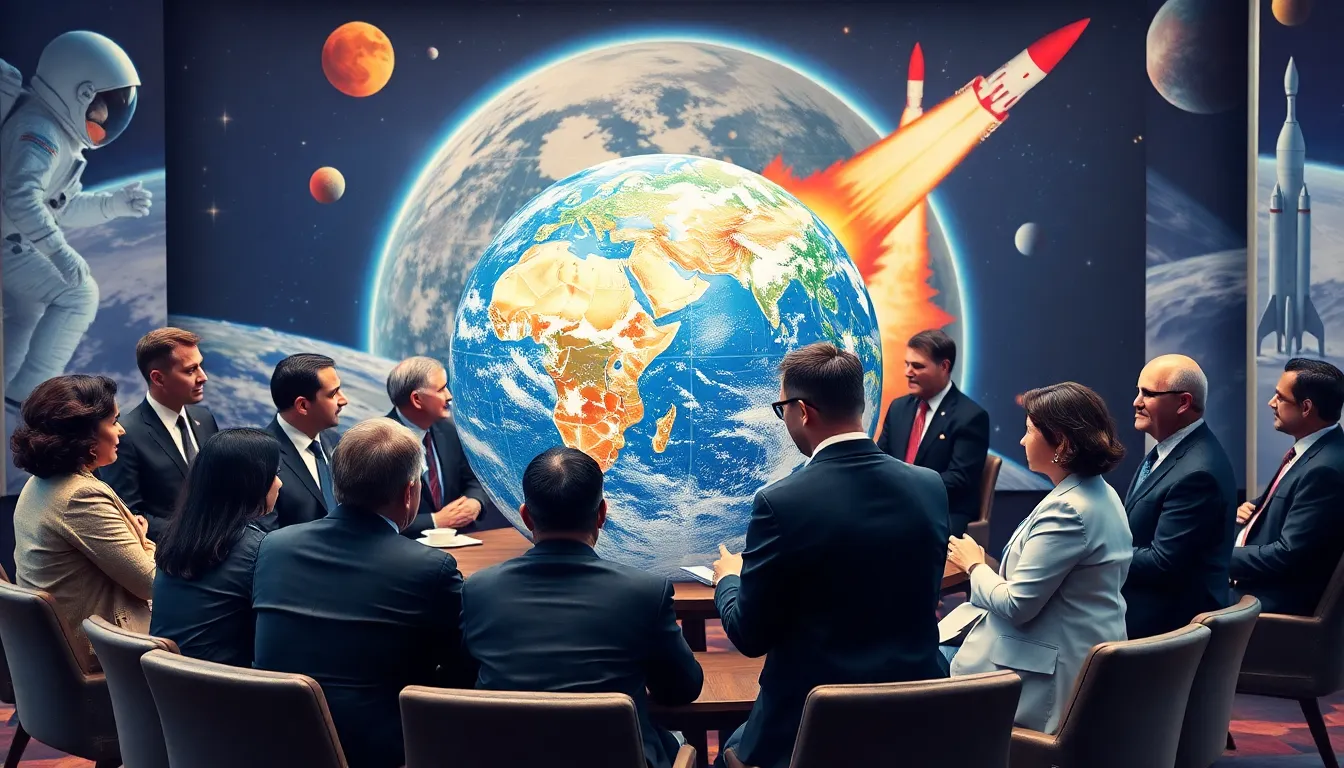
Space law has evolved significantly since its inception, influenced by international cooperation and technological advancements.
The Outer Space Treaty
The Outer Space Treaty, signed in 1967, serves as the foundational document for space law. This treaty establishes that outer space is not subject to national appropriation. It promotes the peaceful use of celestial bodies and encourages cooperation among nations. Significantly, the treaty prohibits the placement of nuclear weapons in space. Additionally, it holds countries liable for damages caused by their space objects. With over 100 signatories, it provides essential guidelines for future explorations and activities beyond Earth.
Other Key Treaties and Agreements
Several other treaties and agreements complement the Outer Space Treaty. The Rescue Agreement, established in 1968, mandates that countries assist astronauts in distress, ensuring their safe return. The Liability Convention, created in 1972, clarifies liability issues related to damages caused by space objects. The Registration Convention of 1976 addresses the registration of space objects to enhance transparency. As private companies increasingly engage in space activities, these agreements become crucial for addressing emerging legal challenges. These legal frameworks adapt to the ongoing commercialization of space, ensuring a regulated environment for all stakeholders involved.
Current Framework of Space Law
Space law consists of a complex network of national and international regulations that guide outer space activities. This framework evolves continuously to accommodate advancements in technology and the growing commercial interests in space.
National vs. International Law
National laws govern a country’s space activities, providing specific regulations for launch operations and satellite deployment. Countries like the United States and Russia have established comprehensive legal structures that address various aspects of space exploration. International law, on the other hand, creates a collaborative environment for space-faring nations. Treaties such as the Outer Space Treaty lay foundational principles applicable globally. Discrepancies arise as nations prioritize different legal interpretations, creating challenges in cooperative endeavors.
Regulatory Bodies and Organizations
Multiple organizations contribute to the establishment and enforcement of space law. The United Nations plays a pivotal role through the Office for Outer Space Affairs, facilitating international cooperation. Other entities like the International Telecommunication Union regulate satellite communications. National space agencies, such as NASA and the European Space Agency, develop specific guidelines and procedures. Their involvement ensures that various stakeholders comply with international norms while promoting safe and sustainable practices in space exploration.
Contemporary Issues in Space Law
Current developments in space law highlight pressing challenges and opportunities as humanity explores the cosmos. The expansion of commercial space activities introduces new legal considerations that require careful attention.
Commercialization of Space
Commercial exploitation of space resources raises significant regulatory questions. Private companies, such as SpaceX and Blue Origin, engage in satellite launches and space tourism, creating a need for clear legal frameworks. Diverse stakeholders must address liability and property rights in this evolving landscape. Licensing requirements also play an essential role in ensuring safety and compliance. Competition among nations and corporations increases, necessitating international cooperation to harmonize laws. Transparent agreements can foster innovation while preventing conflicts as private interests expand in outer space.
Space Debris and Environmental Concerns
Space debris poses a growing threat to both current missions and long-term sustainability in orbit. Existing regulations inadequately address the increasing congestion of low Earth orbit. Various organizations, including the European Space Agency, emphasize the importance of debris mitigation practices. Comprehensive strategies, such as debris removal and better tracking systems, become crucial for future operations. Nations must collaborate on standards that emphasize environmental protection in outer space. Spaceships and satellites contribute to pollution if not managed properly, highlighting the need for ongoing dialogue about responsible space activities.
Future Directions of Space Law
Space law is set for significant evolution as new challenges and opportunities emerge. Innovation in space activities prompts the need for updated regulations, impacting how nations and companies operate beyond Earth.
Emerging Technologies
Advancements like satellite megaconstellations and in-situ resource utilization demand new legal considerations. Legal frameworks must address ownership of resources extracted from celestial bodies, ensuring fair access and usage among nations and private entities. Additionally, solutions for potential conflicts over satellite space require clear guidelines to manage orbital paths and minimize collisions. Technologies such as autonomous space vehicles raise questions about liability and accountability in the event of accidents. As these technologies unfold, timely adaptations to regulations will facilitate safe and responsible exploration.
International Cooperation and Challenges
Challenges persist in fostering international collaboration in space governance. Nations must engage in dialogue to establish unified standards that address space traffic management and debris mitigation. Disparities in national regulations can hinder cooperative efforts, impacting global safety in orbit. Formation of coalitions among countries will enhance accountability and facilitate effective shared frameworks. Negotiations on issues like property rights and resource management will require patience and commitment to mutual benefit, as interests of various stakeholders often conflict. As humanity’s presence in space expands, collective action remains crucial for sustainable exploration and utilization of extraterrestrial environments.
Space law is more than just a set of regulations; it’s a vital framework that ensures safe and responsible exploration of the cosmos. As humanity ventures further into space the need for updated legal structures becomes increasingly clear. The rise of commercial activities and innovative technologies presents unique challenges that require collaborative efforts among nations.
Ongoing dialogue and cooperation are essential for establishing standards that address liability environmental protection and resource management. With the future of space exploration on the horizon the evolution of space law will play a crucial role in shaping how humanity interacts with the universe. The path forward hinges on collective action and a commitment to sustainable practices in this uncharted territory.