
In a world where forgetting passwords feels like a rite of passage, biometrics authentication swoops in like a superhero. Forget the endless cycle of “reset your password” emails—biometrics offers a seamless way to unlock devices and secure sensitive information. With just a fingerprint or a quick glance, users can access their digital lives faster than they can say “I forgot my password” for the hundredth time.
But it’s not just about convenience; it’s about security. Biometrics authentication uses unique physical traits, making it much harder for hackers to pull off a digital heist. So while your neighbor might still be using “123456” as their password, you’ll be confidently waving goodbye to cyber threats. Dive into the fascinating world of biometrics and discover how this cutting-edge technology is changing the way we think about security, one thumbprint at a time.
Overview of Biometrics Authentication
Biometrics authentication uses unique physical traits for identification and access control. This technology includes various methods such as fingerprint scanning, facial recognition, iris recognition, and voice recognition. Each method relies on individual characteristics, making it difficult for impersonators to gain unauthorized access.
Fingerprint recognition involves capturing and examining the unique patterns on an individual’s fingers. The technology processes the ridges and valleys on the skin’s surface, which differ from one person to another. This technique enjoys widespread adoption due to its accuracy and ease of use.
Facial recognition analyzes facial features and proportions, ensuring that only authorized users can access specific devices or information. Algorithms compare a live image to a stored image to confirm identity. This method is commonly utilized by smartphones, laptops, and security systems.
Iris recognition targets the unique patterns in the colored part of the eye. This approach leverages high-resolution images to identify individuals accurately. Because the patterns are distinct and stable over time, iris recognition provides a highly secure form of authentication.
Voice recognition relies on vocal characteristics, capturing an individual’s tone, pitch, and cadence. This method can authenticate users through spoken phrases. It finds applications in call centers and smart virtual assistants.
Biometric authentication not only enhances security but also streamlines the user experience. Eliminating the need for passwords minimizes frustration and simplifies access to devices and services. As technology evolves, the integration of biometric methods in everyday applications continues to increase, promoting secure and convenient interactions.
Types of Biometrics Authentication
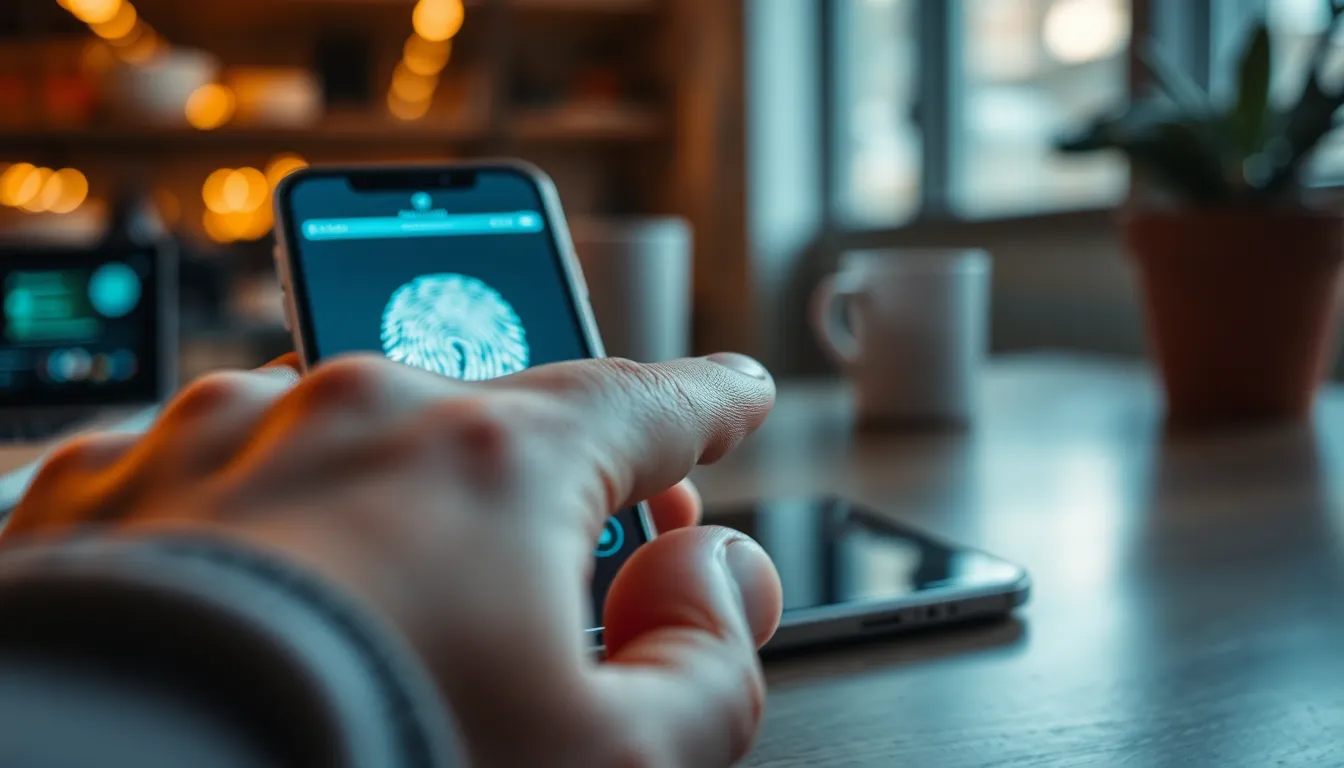
Various biometric authentication types provide distinct methods for verifying identity. Each method leverages unique physical traits for secure access.
Fingerprint Recognition
Fingerprint recognition identifies individuals through their unique fingerprint patterns. Sensors scan the ridges and valleys on fingertips for verification. This method boasts high accuracy and efficiency. Consequently, many smartphones and security systems rely on fingerprint readers for easy access. Studies indicate that using fingerprints reduces unauthorized access significantly compared to traditional passwords.
Facial Recognition
Facial recognition systems analyze facial features for authentication purposes. Many devices utilize cameras to capture live images, which are then compared to stored profiles. This method enhances security by ensuring only authorized individuals gain access. Its applications vary from smartphones to complex security systems. Research shows that facial recognition technology improves user convenience while maintaining stringent security standards.
Iris Recognition
Iris recognition depends on unique patterns found in an individual’s iris. Specialized cameras capture detailed images of the eye for authentication. This method provides a high level of security due to the uniqueness of iris patterns. Organizations often use iris recognition in secure environments and governmental applications. Data suggests that iris recognition significantly minimizes the risk of identity theft compared to other biometric methods.
Voice Recognition
Voice recognition employs vocal characteristics for user authentication. Systems analyze voice patterns and speech to confirm identity. This method offers convenience by allowing hands-free authentication. Additionally, it can function effectively in various applications, from phone systems to smart home devices. Studies reveal that combining voice recognition with other biometric methods often enhances overall security.
Benefits of Biometrics Authentication
Biometric authentication offers numerous advantages, particularly in security and user experience.
Enhanced Security
Enhanced security represents one of the most significant benefits of biometric authentication. Unique physical traits like fingerprints and facial features make it challenging for unauthorized users to access accounts. Compared to traditional passwords, biometric data decreases the likelihood of hacking attempts. For instance, fingerprint recognition boasts a high accuracy rate, reducing unauthorized access incidents significantly. Additionally, facial recognition systems analyze live images versus stored profiles to bolster security further. Iris recognition targets distinctive eye patterns, making it difficult for identity thieves to operate. With each method relying on individual characteristics, the security provided by biometric authentication surpasses standard password protections.
User Convenience
User convenience remains a crucial aspect of biometric authentication. By enabling quick access, biometrics eliminate the frustration associated with remembering complex passwords. Fingerprint and facial recognition technologies allow instant authentication, streamlining the login process for users. Many devices incorporate these methods, making access seamless across applications. Voice recognition not only enhances security but also facilitates hands-free access, catering to users in various environments. As biometric methods evolve, their integration into daily life continually increases, providing an effortless balance of security and usability. This accessibility transforms how individuals engage with technology, creating a smoother and more efficient experience.
Challenges and Limitations
Biometric authentication presents significant challenges that affect its widespread adoption.
Privacy Concerns
Concerns about privacy remain at the forefront of biometric technology. Users worry that their biometric data, such as fingerprints and facial features, could be collected and misused. Trust in data security becomes vital, as breaches could lead to identity theft. Additionally, biometric databases can be vulnerable to hacking, raising alarms about personal information exposure. Laws and regulations governing data protection must evolve to address these issues. Inadequate safeguards may inhibit user acceptance and limit technology implementation across various sectors.
False Acceptance and Rejection Rates
Another challenge lies in the accuracy of biometric systems, particularly false acceptance and rejection rates. False acceptance occurs when unauthorized users gain access through misidentification, compromising security. On the other hand, false rejection happens when legitimate users are denied access due to system errors. Both situations can lead to frustration and distrust among users. System improvements are essential to minimize these rates, ensuring reliable performance across different environments. Continuous calibration and advances in technology are necessary to enhance the accuracy of biometric authentication.
Future Trends in Biometrics Authentication
Emerging technologies in biometrics authentication will drive the next phase of development in security solutions. Artificial intelligence integration enhances the accuracy of biometric systems, reducing false acceptance and rejection rates. Companies are exploring multimodal biometric systems that combine multiple traits, like facial recognition and fingerprint scanning, for improved reliability.
Facial recognition technology is evolving rapidly, with real-time processing capabilities becoming standard. Such advancements enable seamless interactions across various platforms, from mobile devices to public security systems. Voice recognition continues to grow in popularity, especially in smart home devices, enhancing user convenience while maintaining robust security measures.
Wearable technology also plays a critical role, allowing biometric authentication through smartwatches and fitness trackers. These devices often include sensors that authenticate users based on unique physiological metrics, like heart rate or skin temperature. Continued integration of biometrics into mobile payment systems indicates a significant shift toward contactless transactions, providing speed and security.
Cloud-based biometric solutions are on the rise, offering scalable options for businesses. By storing biometric data securely in the cloud, organizations can streamline their authentication processes. This trend supports a move toward decentralized identity management, where users maintain control over their biometric information.
As these technologies progress, regulations surrounding biometric data usage will also evolve. Policymakers are increasingly recognizing the need for robust frameworks to protect user privacy and prevent data misuse. Ongoing discussions about ethical implications and security standards will shape the future landscape of biometrics authentication.
Biometric authentication is reshaping the landscape of security and convenience in the digital age. With its reliance on unique physical traits, it offers a robust defense against unauthorized access while streamlining user experience. As technology continues to advance, the integration of artificial intelligence and multimodal systems will further enhance accuracy and reliability.
However, addressing privacy concerns and ensuring data security remain crucial for widespread adoption. The ongoing evolution of regulations and ethical standards will play a significant role in shaping the future of biometric solutions. As users become more aware of the benefits and challenges, biometric authentication is poised to become an integral part of everyday life, balancing security and convenience like never before.