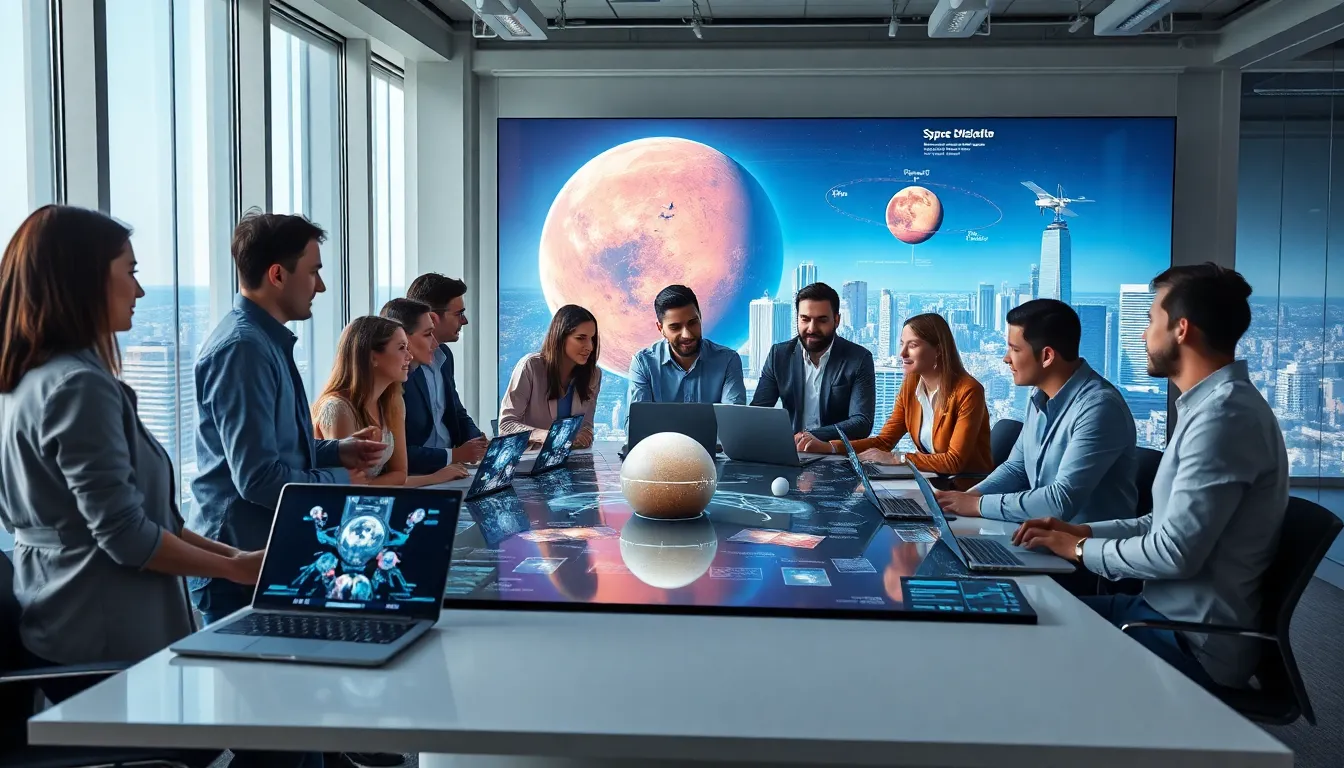
Imagine a time when humanity gazed up at the stars not just in awe, but with a plan. The Space Age is that shimmering era when science fiction turned into reality, and technologies we now take for granted began to take flight. From calculators the size of your palm to satellites zipping around Earth, this journey through innovation is nothing short of spectacular. Buckle up, because we’re diving into how space age technology transformed our world while keeping a smile on our faces, and maybe a few bad space puns along the way.
The Dawn of the Space Age

The Space Age kicked off in earnest with the launch of Sputnik 1 in 1957. At that moment, a silver sphere filled with beeping dreams orbited Earth, igniting the imaginations of millions. This event didn’t just mark a new chapter in the book of human exploration: it also sent ripples through technology, education, and geopolitics. The Cold War heating up like a rocket engine meant business in more ways than one. Fast forward to 1969, and humanity stood elated on the lunar surface. Neil Armstrong’s ‘one small step’ encapsulated decades of effort, driving further curiosity on a global scale and proving that the sky was certainly not the limit.
As nations raced to claim their piece of astrological pie, research in rocketry, materials, and even robotics blossomed. Universities and research institutions got involved, creating educational programs and revolutionizing engineering disciplines. This era laid the foundation not just for astronauts but for engineers, scientists, and dreamers eager to push boundaries.
Key Innovations and Breakthroughs
Innovation surged through the Space Age like a comet dashing through the night sky. Satellite technology revolutionized telecommunications. Before we knew it, everyone was sporting portable devices, call it the world’s launch into the digital era. Think about it: GPS, weather forecasting, and even cooking instructions are all connected to satellites zipping through space like overworked delivery drones.
But let’s not forget the bold strides in materials science. The development of heat-resistant materials like silicone and carbon composites allowed spacecraft to re-enter the Earth’s atmosphere safely. Imagine asking an engineer in 1957 how they would handle high-speed re-entry: they probably would have scratched their heads, a bit like your cat contemplating a laser pointer. Innovations in computing also played a huge role. The Apollo Guidance Computer might have had less processing power than today’s simplest smartphones, but it accomplished the mighty task of landing humans on the moon.
Then there’s the incredible progress in human health technology. Engineers and scientists developed advanced life support systems for space missions, which surprisingly, morphed into improved medical technologies on Earth. From telemetry in hospitals to remote monitoring systems, the benefits truly keep on giving.
Impact on Modern Technology
Modern technology can trace its lineage back to the Space Age, weaving a tapestry of advancements that define contemporary life. Think about how our daily lives are intertwined with space science. From satellite communication facilitating our favorite binge-watching sessions to MRI machines that make doctors spout science fiction levels of accuracy, the connection is deep.
The Internet, an essential in today’s society, wouldn’t exist in its current form without the satellite framework laid out by early space exploration. Remote sensing technology aids in environmental monitoring, leading to more responsible usage of our planet’s resources. That’s right. Saving the Earth is kind of a space-age deal.
Socially, the Space Age inspired generations. It created a new realm of educational programs, enticing young minds to explore physics, engineering, and astrobiology. Today, schools have robotics clubs where kids can dream of building the next Mars rover. The excitement of space exploration is not just for the scientists but has taken hold of public imagination and creativity.
The Role of Space Agencies
It’s hard to talk about the Space Age without tipping a hat to the space agencies that made it all happen. NASA, ESA, Roscosmos, the names evoke not just organizations but a sense of wonder. They are the driving forces behind profound missions, launching both satellites and ambition across the globe. NASA’s Mars Rover has become a household name, establishing an emotional connection between humankind and the distant red planet. Who else can claim they sent a car-sized robot to another planet to check for signs of life?
Beyond missions to space, these agencies also empower both commercial and academic spheres. By partnering with private companies like SpaceX, they’ve accelerated the pace of innovation and have made space travel more accessible. This collaborative approach is ushering in a new wave of space exploration, including plans for commercial flights and lunar habitats.
Through outreach and education, they inspire a future generation. Young students are now looking at the stars and asking, ‘Why not me?’ Much of today’s excitement around space exploration is a shared responsibility, reminding everyone that the universe is inviting.
Future Prospects of Space Age Technology
What’s next in the realm of space age technology? The possibilities seem limitless, and that’s quite exciting. Projects like the James Webb Space Telescope promise to unlock secrets about the universe. Will we find exoplanets capable of supporting life? Only time will tell, but researchers have their scopes set to great heights.
On the horizon are ambitious plans for returning humans to the Moon and even sending people to Mars. The emerging concept of terraforming might sound like science fiction, but advancements in technology are slowly breaking down those barriers. Imagine humanity creating a second home on another planet. Doesn’t that make you feel like a pioneer?
Also, artificial intelligence is set to revolutionize space exploration. Robots equipped with AI could undertake hazardous tasks, paving the way for humans to follow safely. These advancements will not only shape our exploration of space but also influence technologies back on Earth, in fields ranging from agriculture to smart cities.