
Space has always been the final frontier, but let’s face it, without advanced technology, we’d still be trying to figure out how to get a toddler to stop crying on a long flight. Imagine the world without satellites keeping your GPS from sending you to that sketchy part of town, or whose rockets make a jaunt to Mars seem like a neighborhood walk. In this text, we’ll explore some fascinating space technology examples that are not just rocket science but also deeply intertwined with our daily lives. Buckle up as we launch into the cosmos of innovation.
Satellite Technology
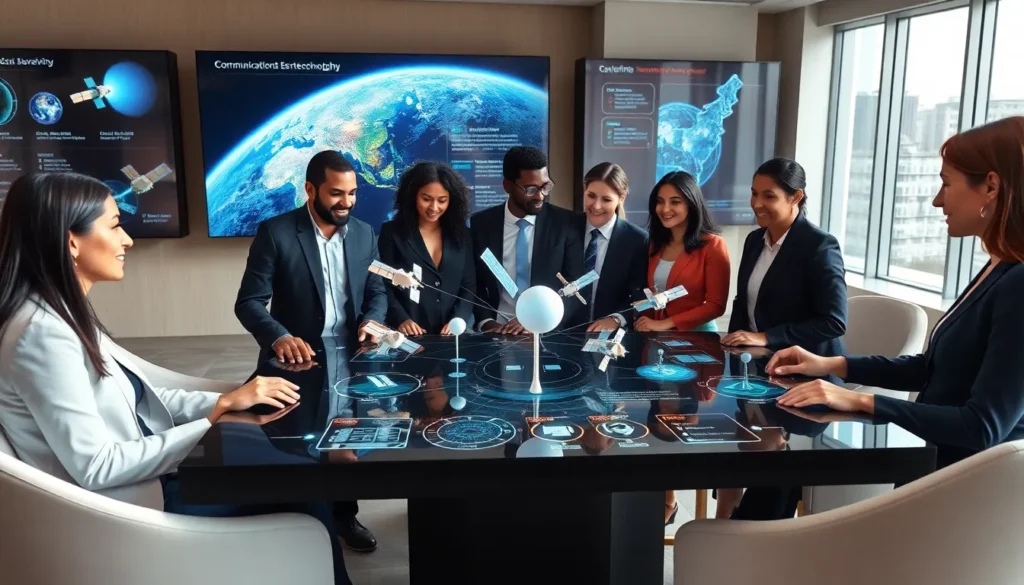
Satellite technology serves as the backbone of modern communication, navigation, and even weather forecasting. Without these metal marvels orbiting the Earth, your smartphone would be about as useful as a paperweight on a good day. Here’s a deeper jump into how satellites revolutionize various sectors:
Communication Satellites
Communication satellites relay signals across vast distances. From enabling our wireless devices to connecting families across the globe, they make instant communication possible. Companies like Iridium and SpaceX have launched constellation networks that enhance coverage, allowing users to say goodbye to dead zones.
Weather Satellites
Predicting rain no longer requires sticking your finger in the air. Weather satellites monitor atmospheric conditions from high above, providing accurate forecasts that help us decide whether to carry an umbrella or dust off the grill. GOES-R is a prime example, delivering near real-time data to meteorologists.
Navigation Systems
GPS wouldn’t exist without satellites orbiting above. These navigation satellites make it possible for both everyday users and commercial fleets to pinpoint their locations with incredible accuracy. Lost? With GPS, help is just a tap away.
Earth Observation
Aside from communication, satellites play a pivotal role in monitoring Earth’s health. They track deforestation, urban development, and even natural disasters. The Landsat program has been instrumental in providing crucial data for environmental research.
Satellite technology exemplifies how far we’ve come since the first artificial satellites were launched during the Cold War. As we continue to improve these systems, wait for future applications that will transform not just technology, but our very way of life.
NASA’s Space Launch System (SLS)
NASA’s Space Launch System is nothing short of an engineering marvel. Serving as the backbone for deep space exploration, the SLS is designed to carry astronauts and cargo beyond Earth’s orbit, opening up possibilities for missions to the Moon and Mars.
Designed for Deep Space Exploration
The SLS boasts a powerful rocket capable of sending heavy payloads into deep space. With its Block 1 configuration, it can lift up to 80 metric tons. That’s like having a rocket that can effortlessly carry every couch from a two-bedroom apartment.
A New Era of Human Exploration
On its Artemis missions, the SLS will be instrumental in returning humans to the lunar surface. Part of a larger initiative, these missions aim to establish a sustainable human presence on the Moon, paving the way for future missions to Mars. Imagine astronauts stepping onto Martian soil, all thanks to the technologies being developed today.
Future Upgrades
As technologies evolve, so too does the SLS. Future upgrades will enhance its capabilities, ensuring it remains at the forefront of space exploration. This includes potential modifications that could allow for the deployment of crewed missions and cargo deliveries, further bridging the gap between Earth and other celestial bodies.
Space Robotics and Rovers
Space robotics and rovers are astounding achievements, showcasing both human ingenuity and automation. These robotic explorers are equipped with high-tech instruments to analyze the cosmos without needing a human on board.
Robotic Arms and Landers
Robotic arms are utilized extensively in space exploration. For instance, the Canadarm2 on the International Space Station is used for capturing and repairing satellites. This remarkable technology allows astronauts to conduct missions safely without venturing into the vacuum of space.
Rovers on Other Planets
Rovers like Curiosity and Perseverance have walked on Martian terrain, beaming back critical information about the planet’s climate and geology. Equipped with advanced cameras and analytical tools, these rovers work tirelessly, sending back data that can take years to analyze.
Prospective Developments
The future of space robotics looks promising. Plans are underway for more advanced robotic explorers that could land on icy moons like Europa or Titan. They will scout these otherworldly locations, searching for signs of life or potential for human colonization.
Commercial Space Ventures
Commercial space ventures are rapidly transforming the landscape of aerospace. Companies like SpaceX, Blue Origin, and Virgin Galactic are leading the charge, driven by innovation and competition.
SpaceX Revolutionizes Launches
SpaceX has redefined space travel by developing the Falcon 9 rocket and Crew Dragon spacecraft. Their reusable rocket technology has dramatically reduced the cost of launching payloads into orbit, making space more accessible than ever before. The implications for universities, governments, and private enterprises are profound, effectively democratizing access to space.
Space Tourism on the Horizon
With companies like Virgin Galactic and Blue Origin offering suborbital flights, commercial space travel is about to become a reality. Soon, vacationers may float in microgravity, sipping space cocktails, and basking in views of Earth from the stratosphere.
Future Competitive Landscape
As commercial ventures proliferate, it’s clear we are on the precipice of a new era. Competition will spur technological advancements and reduce costs while opening new pathways for research and exploration.
Emerging Space Technologies
Emerging technologies in space exploration are poised to revolutionize how humanity interacts with the universe. Innovations like space elevators, solar sails, and asteroid mining are not just pie-in-the-sky ideas.
Space Elevators
The concept of a space elevator may sound like something out of a science fiction book, yet it proposes a feasible method to transport materials and people into space using a tether to Earth. While practical implementation is years away, research is ongoing to assess its viability.
Solar Sails
Solar sails represent an exciting advancement in propulsion technology. Utilizing sunlight to propel a spacecraft, these sails are lightweight and efficient. Imagine a spacecraft cruising through the solar system, powered only by the sun like a sailboat on the ocean.
Impact of Space Technology on Everyday Life
Space technology extends far beyond the realm of exploration: it has tangible effects on daily life. Many of the innovations first developed for space missions have found their way into consumer products, enhancing lives and driving technological progress.
GPS and Location Services
As previously mentioned, GPS relies on satellites orbiting Earth. This technology, born from space exploration, has changed how people navigate their environment. Real-time location sharing and mapping applications have improved significantly since these innovations became widespread.
Weather Forecasting
Satellites allow meteorologists to monitor weather patterns and predict storms, enabling timely warnings that save lives. Robust weather forecasting systems have developed from technologies tested in space missions.
Medical Innovations
Technologies designed for space exploration have led to breakthroughs in medicine. Whether it’s improved imaging techniques or advancements in telemedicine, the influence of space tech percolates through various fields.
Environmental Monitoring
Satellites track deforestation, pollution, and climate change, supplying invaluable information for environmental preservation efforts. Understanding our planet’s dynamic systems has become increasingly vital as humanity tackles climate change.
Future Prospects in Space Technology
Looking ahead, the landscape of space technology promises exciting advancements. Innovations will likely only accelerate as private industry and government initiatives continue to partner.
Colonization of Other Planets
With efforts like NASA’s Artemis program and private missions to Mars, settling on other planets may transition from science fiction to reality. It’s not just about exploration: it’s about creating sustainable human habitats off Earth.
Advanced Life Support Systems
Technologies that can create life-sustaining conditions in outer space will also develop. Imagine systems capable of converting carbon dioxide into oxygen or recycling water in innovative ways.
Interstellar Travel
Although it sounds like a plot twist from a sci-fi movie, interstellar travel may someday be possible. Research into propulsion systems like warp drives may become viable, expanding humanity’s reach into the cosmos further than ever before.